B.A. LL.B. vs LL.B.: Which is better?

If you want to build a career in law, one of the first questions you’ll face is this: Should you choose a 5-year B.A. LL.B. after Class 12, or pursue a 3-year LL.B. after graduation?
Both are recognised law degrees in India and both can lead to strong careers in litigation, corporate law, judiciary, legal academia, policy, and more. The better option is not the one with the “bigger” name – it is the one that fits your stage, timeline, and career plan.
In simple terms: if you are sure about law right after Class 12, B.A. LL.B. is usually the more direct and strategic route. If you decide to pursue law after completing graduation, LL.B. is the right path.
Table of Contents
B.A. LL.B. degree: Overview
Given below are some points that go over the basic details of a B.A. LL.B. course
- As mentioned before, the B.A. LL.B. full form is Bachelor of Arts and Bachelor of Legislative Law. It is a five-year integrated degree.
- Students who have finished 10+2 in any stream with 45% marks from a recognized board/university are eligible for admission to B.A. LL.B.
- Since it is an integrated program, it includes history, political science, economics, sociology, and other topics, as well as an in-depth study of law and legislation.
- The goal of this integrated law curriculum is to educate students on the socio-legal aspects of the law. The course provides students with outstanding analytical abilities as well as argumentation skills, allowing them to comprehend the link between law and society.
- The B.A. LL.B. degree gives extensive legal education experience. Students get early access to courtroom practice opportunities such as moot courts, research presentations, mock trials, and so on. Candidates also get opportunities to do internships with prominent law firms, corporations, NGOs, and other organizations each semester.
- Students who complete the course can pursue advanced courses such as LL.M., MBA, Company Secretary, and so forth.
LL.B. Degree: Overview
Given below are some points that go over the basic details of an LL.B. degree.
- Bachelor of Laws (LLB) is a three-year degree program. Students who have graduated with 45% in any stream from a recognized university are eligible for LL.B. admission.
- The course focuses on core law subjects such as fundamentals of law, Indian constitutions, labor law, family law, human rights and international law, administrative law, and so on. Students are taught law-related disciplines over the course of three years.
- The course’s goal is to provide students with a thorough grasp of the technical and doctrinal components of the law, as well as the function it plays in modern society.
- After completing the course, students can pursue advanced studies such as a Master of Laws (LLM).
- Students get intensive practical instruction, such as courtroom practice, as institutions set up Moot Courts, research submissions, Mock Trial Courts, and internship opportunities with major legal firms, corporations, and non-governmental organizations.
Important subjects covered in B.A. LL.B. and LL.B. Courses
| Subjects in B.A. LL.B. | Subjects in LL.B. |
| Administrative Law | Labour Law |
| Comparative Law | Constitutional Law |
| Economics | Family Law |
| Constitutional Law | Human Rights & International Law |
| Business Law | Environmental Law |
| Alternative Dispute Resolution | Company Law |
| Family Law | Legal Writing |
| Corporate Law | Administrative Law |
| Environmental Law | Law of Tort |
| Banking and Insurance Law | Criminal Law |
| Criminology | Jurisprudence |
These are some of the major subjects in B.A. LL.B. and LL.B. To read more in-depth about all the subjects and other information, click the links below.
B.A. LL.B. vs LL.B.: Key Differences You Should Know
| Factor | B.A. LL.B. | LL.B. |
|---|---|---|
| When you can apply | After Class 12 | After graduation |
| Course duration | 5 years | 3 years |
| Course structure | Integrated (Arts + Law) | Core law-focused |
| Best for | Students sure about law early | Graduates entering law later |
| Common entrance routes | CLAT, AILET, SLAT, MH CET Law, etc. | DU LL.B., MH CET Law (3-year), university-level processes |
| Career eligibility after completion | Legal practice, higher studies, judiciary prep, corporate law, etc. | Same as B.A. LL.B. |
Important: Neither degree is “superior” by default. What matters more is the quality of the college, the internships you complete, the skills you build, and the career path you want to pursue.
Which Is Better After Class 12?
If you are certain that you want to become a lawyer after Class 12, B.A. LL.B. is usually the better choice.
Why?
- You enter the legal field earlier
- You get more time to build internships and exposure
- You can prepare for top law schools through national-level entrance exams
- You start developing legal reasoning, research, mooting, and networking earlier than students who enter law after graduation
For most school students who are already preparing for law entrances, B.A. LL.B. is the more direct and efficient route.
When Is LL.B. the Better Option?
LL.B. is the better option if you decide to pursue law after graduation or if you want to combine law with a prior academic background.
This can be a smart path for:
- Students who were not sure about law after Class 12
- Graduates from arts, commerce, science, management, or engineering backgrounds
- Aspirants who want to bring an additional academic perspective into law
For example, a commerce graduate may find corporate or tax law especially relevant, while a political science graduate may naturally align with constitutional law, policy, or civil services-oriented legal paths.
Final Verdict: B.A. LL.B. vs LL.B. – Which Should You Choose?
Choose B.A. LL.B. if:
- You are clear about pursuing law after Class 12
- You want to start your legal journey early
- You are targeting 5-year law entrance exams and integrated law programmes
Choose LL.B. if:
- You want to pursue law after graduation
- You discovered your interest in law later
- You want a 3-year focused legal degree after a prior bachelor’s degree
The simplest answer is this:
If you are already sure about law in school, B.A. LL.B. is usually the better route. If you decide later, LL.B. is the right route.
Both are valid. Both are respected. The smarter choice depends on when you are entering law – not on which degree sounds better on paper.
Frequently Asked Questions
Q: Is B.A. LL.B. better than LL.B.?
A: Not automatically. B.A. LL.B. is usually better for students who are sure about law after Class 12, while LL.B. is the right choice for graduates who decide to enter law later.
Q: Can I become a lawyer through both B.A. LL.B. and LL.B.?
A: Yes. Both are recognised law degrees and can lead to legal careers, subject to applicable academic and professional requirements.
Q: Which is better after Class 12: B.A. LL.B. or LL.B.?
A: After Class 12, B.A. LL.B. is the direct route. LL.B. can be pursued only after graduation.
Q: Does B.A. LL.B. have better career scope than LL.B.?
A: Career scope depends more on the law school, internships, skills, and career path than on the degree label alone.
Suggested Readings
| How to prepare for CLAT 2027 |
| CLAT previous year’s question papers |
| How to prepare for AILET 2027 |
Author

Popular Posts

MH-CET Law 2025 Cutoff(5-Year)Out: Check Past Year Trends, & More
By CL LST Team
27 May 2025 12561

CLAT 2026 Question Paper (Updated) – Download CLAT 2026 Question Paper PDF
By CL LST Team
09 Dec 2025 10243
![MH-CET Law 2025 Result OUT! [Direct Link to Score card]](https://www.lawentrance.com/blogs/wp-content/uploads/2025/06/ChatGPT-Image-Jun-5-2025-04_52_35-PM.png)
MH-CET Law 2025 Result OUT! [Direct Link to Score card]
By CL LST Team
05 Jun 2025 9251
MH CET Law Reservation Policy
By CL LST Team
31 Mar 2025 8191
Latest Posts
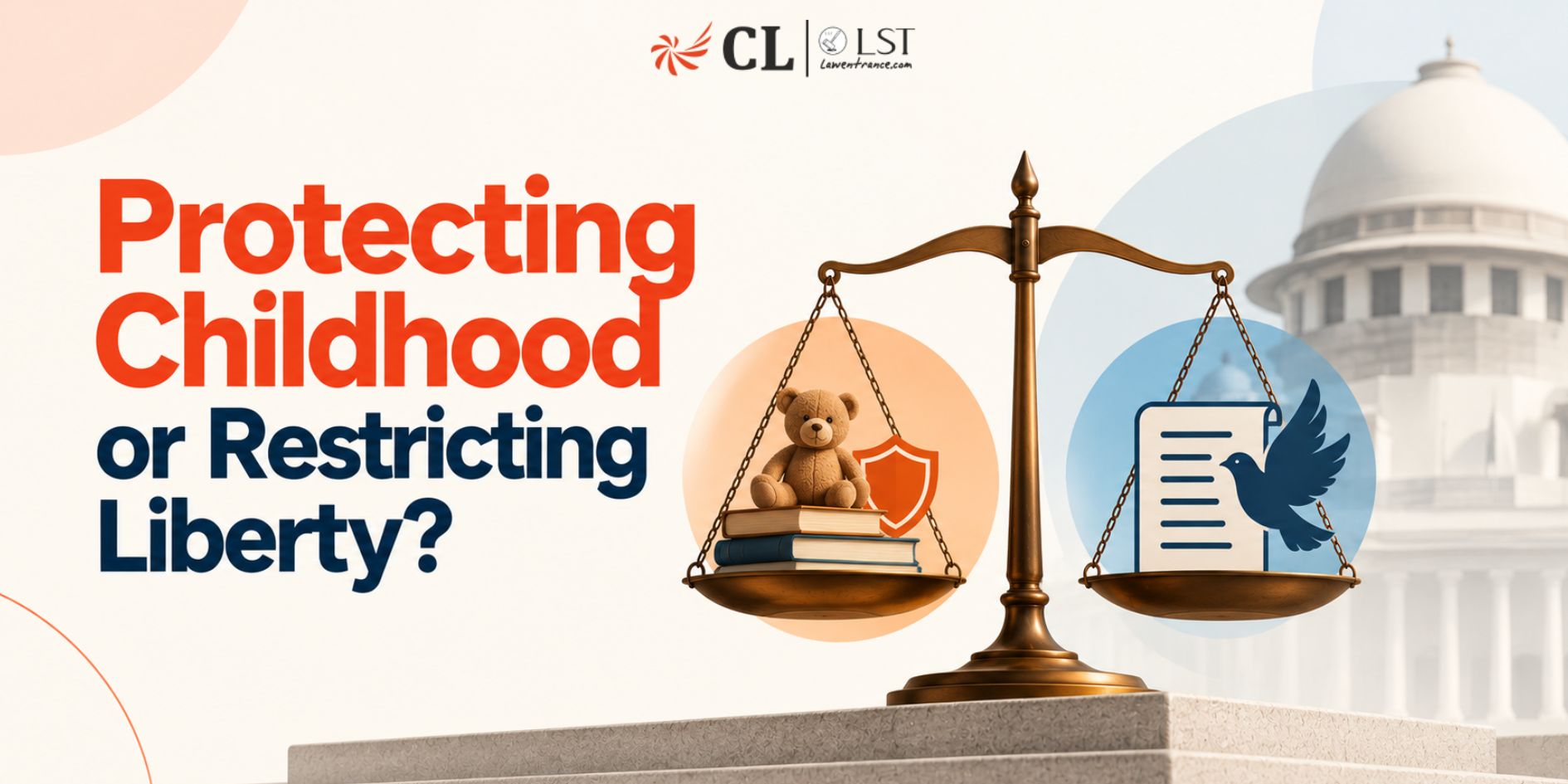
Protecting Childhood or Restricting Liberty? The Constitutional Limits of Age-Based Social Media Regulation in India
By CL LST Team
23 Oct 2026 43

CLAT 2027 Last 30 Days Strategy to Maximize Your Score
By CL LST Team
16 Oct 2026 93
CLAT 2027 Answer Key: Expected Release Date, PDF Download, and Objection Process
By CL LST Team
14 Oct 2026 122
SLAT Results 2027: Date, Scorecard and Merit List
By CL LST Team
13 Oct 2026 82