
The Imperceptible Cost of Gratuitous Digital Applications: Judicial Safeguards in the Bharatiya Data Privacy Regime.

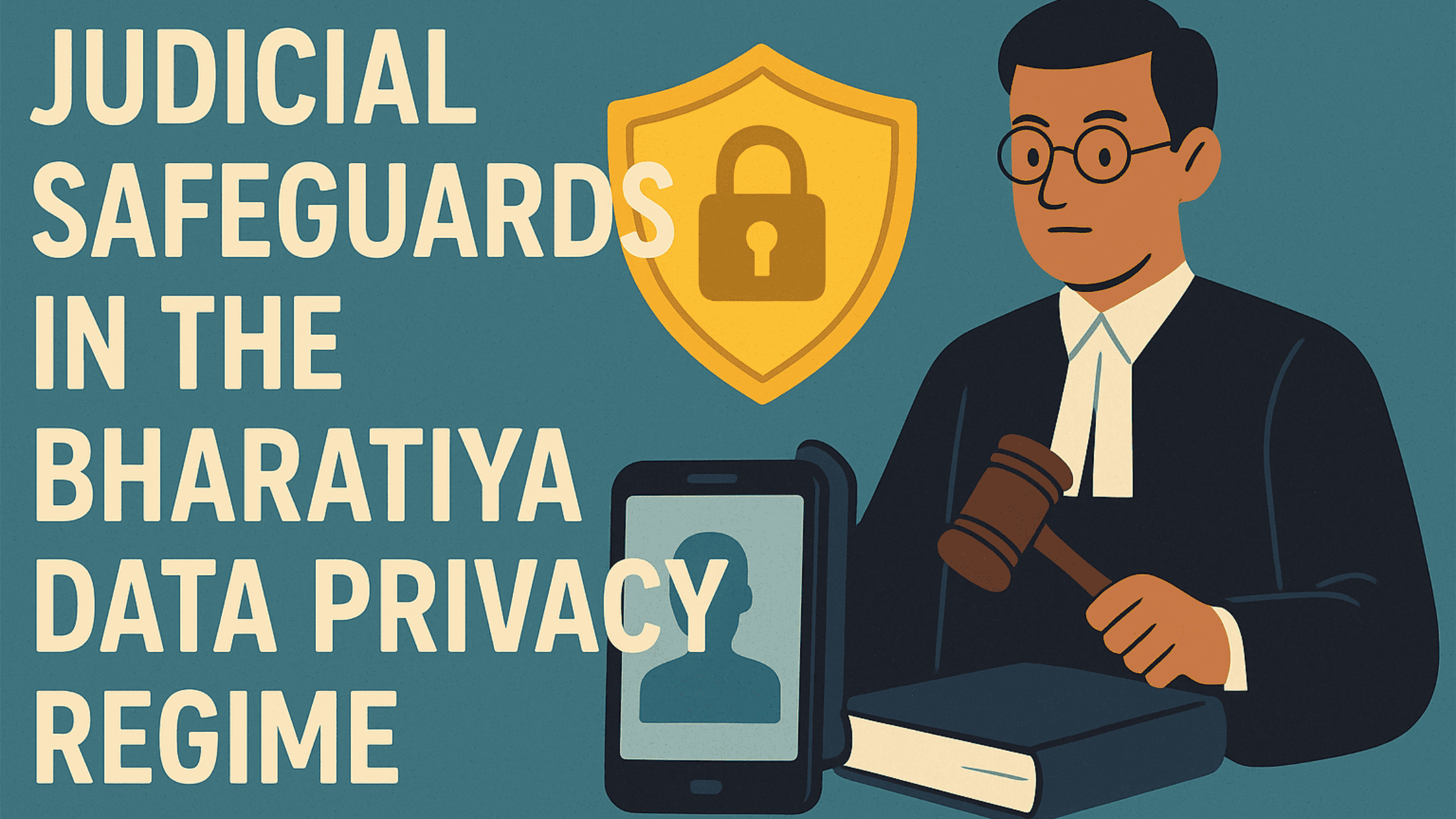
Table of Contents
Introduction
Every day, millions of people worldwide begin their digital activities by downloading and using mobile applications that appear free at first. However, these seemingly free apps often come with lengthy and complicated Privacy Policies crafted primarily to obtain mandatory user consent, a process many users do not fully understand. This legally required consent is often gained with little awareness of the permissions granted, allowing extensive collection and processing of sensitive personal information without genuine understanding of connected risks (Zimmeck et al., 2017). Studies show that most Privacy Policies are crafted, making them difficult for average users to comprehend, which leads to many ignoring or skimming them. Equally concerning, many apps fail to offer clear or easily accessible privacy documents, adding to the lack of transparency in Data handling (Alamri et al., 2022).
Constitutional Foundations and Judicial Milestones
In the Landmark Judgement of K.S. Puttaswamy (Retd.) v. Union of India (2017), the Supreme Court of India firmly recognized the Right to Privacy as a Fundamental Right under Article 21 of the Indian Constitution. The Court described Privacy as vital to Dignity, Autonomy, and Liberty, especially important in the Digital era (Bhandari et al., 2017). The Right is not absolute and is with reasonable restrictions applying legality, necessity, and proportionality principles The Puttaswamy judgment marked a major evolution in Indian Constitutional law, defining Privacy as a flexible, fundamental Right responsive to technological and social changes (NUJS Law Review, 2022).
The Digital Personal Data Protection Act, 2023: Framework and Key Stakeholders India’s legislation addressing modern data privacy concerns is codified in the Digital Personal Data Protection (DPDP) Act, 2023, which establishes a comprehensive, unified legal framework for protecting Digital Personal Data. The Act applies to the processing of Personal Data within India when collected in digital form or digitized post collection. It also extends to data processed outside India when associated with goods or services offered to individuals residing in India (PRS India, 2025). The Act permits the processing of personal data only for lawful purposes and with free, informed, specific, and unconditional consent from individuals, defined as Data Principals (LexComply, 2024). Entities that determine the purpose and mean of processing such data, known as Data Fiduciaries bear the primary responsibility to ensure lawful and transparent practices (AZB Partners, 2023). They must provide clear and concise notices before collecting any data, specifying what data is gathered, why it is collected, how it is used, and what rights the Data Principal retains.
Under Section 8 of the Act, fiduciaries are mandated to implement reasonable security safeguards, including encryption, restricted access, and risk assessments, to prevent unauthorized use or loss (DLA Piper, 2024). They must also erase personal data upon withdrawal of consent or once its purpose is fulfilled. Certain large entities, categorized as Significant Data Fiduciaries, carry additional obligations: appointing an India based Data Protection Officer, hiring data auditors, and conducting periodic impact assessments to evaluate and mitigate privacy risks (EY Insights, 2023). The Act also introduces protective
provisions for children’s personal data, mandating verifiable parental consent and prohibiting processing that may cause harm or involve tracking and targeted advertising (LexComply, 2024). Moreover, the Data Protection Board of India (DPBI) a quasi-judicial body has been established to investigate non-compliance, address grievances, and impose financial penalties reaching up to INR 250 crore depending on the severity of the violation (DLA Piper, 2024).
Legal Context for App Users and Developers
The Digital Personal Data Protection (DPDP) Act, 2023 imposes reciprocal duties on mobile app users, known as Data Principals, and mobile application providers, known as Data Fiduciaries. Users have the right to know what personal data is collected, how it is processed, and for what purposes; they may request corrections or deletion of data once the purpose is fulfilled and withdraw consent at any time, compelling providers to discontinue further use or storage of data (PRS India, 2025). Conversely, app providers must present clear, intelligible Privacy Policies and consent forms at installation and before Data collection, specifying Data categories such as location, contacts, media, and behavior analytics. They must obtain explicit and verifiable consent for sensitive permissions like microphone and camera access and erase user data upon account deletion or consent withdrawal. In the event of a Data Breach, providers are obliged to notify affected users and the Data Protection Board of India. They must prohibit unauthorized Third party Data sharing and implement robust security measures including encryption and vulnerability testing (DLA Piper, 2024). These provisions ensure user’s Fundamental Privacy Rights are protected while holding app providers accountable within India’s evolving Data protection regime.
Awareness in the Context of Mobile Application Users under the Bharatiya Data Privacy Framework
The Digital Personal Data Protection (DPDP) Act, 2023 marks a transformative shift toward a Rights based approach to privacy, reinforcing the Right to Privacy as an intrinsic component of the fundamental right to life and liberty under Article 21 of the Indian Constitution (Bhandari et al., 2017). For the mobile application users, this right is often undermined by poor user awareness and exploitative consent practices. Most users are often driven by convenience and skip the Privacy Policies during app downloads without reading and understanding terms of the Privacy Policy, which ultimately lead to an imbalance where app providers (Data Fiduciaries) benefit from user’s (Data Principal) data, leading to a form of unjust enrichment, compromising user’s Autonomy and Digital Dignity (EY Insights, 2023).
DPDP Act, 2023 empowers users on paper, but awareness remains the key enforcement mechanism in practice. Public legal literacy initiatives must emphasize that when users blindly grant app permissions, they risk undermining their own Constitutional protections. The duty thus rests not only on app developers to create user friendly and transparent privacy policies, but also on users to exercise informed discretion before consenting the developer. To illustrate, each permission granted from access to location to storage or camera use must be treated as a conscious act of Data sharing rather than a mere installation requirement. (Illume, 2025; Legal500, 2025).
Conclusion
Transparency, empowerment, and robust legal enforcement underpin India’s Data Privacy protections in the era of rapid digital expansion. Simplifying Privacy communications and mandating Data Fiduciaries to use clear, accessible language bridges comprehension gaps, particularly among diverse populations (JISA Softech, 2025). Also, the DPDP Act specifically mandates mobile application providers to transition from blanket consent practices to purpose
driven, transparent, and user-friendly consent mechanisms, while empowering users to seek
redress through the Data Protection Board’s jurisdiction. Practices like proactive regulatory enforcement, leveraging technology for continuous monitoring and regular audits, shifts oversight from reactive to preventive approach. Empirical regulatory actions including penalties and mandated operational reforms reinforce Fiduciary Accountability and promote Ethical Data Stewardship (Consent.in, 2024). Collectively, these measures shall cultivate a sustainable ecosystem fostering Trust, protecting user Autonomy, and advancing the objectives enshrined in the DPDP Act amidst the imperceptible costs of free digital services.
References
- Alamri, B., et al. (2022). Privacy Policies for Apps Targeted Toward Youth: Descriptive Analysis of Readability. JMIR mHealth and Health. Available at: https://pmc.ncbi.nlm.nih.gov/articles/PMC5773816/.
- AZB Partners. (2023). Digital Personal Data Protection Act, 2023 – Key Highlights. Available at: https://www.azbpartners.com/bank/digital-personal-data-protection act-2023-key-highlights/
- Bhandari, V., Kak, A., Parsheera, S., & Rahman, F. (2017). An Analysis of Puttaswamy: The Supreme Court’s Privacy Verdict. IndraStra Global. Available at: https://www.indrastra.com/2017/11/An-Analysis-of-Puttaswamy-Supreme-Court-s Privacy-Verdict-003-11-2017-0004.html
- Consent.in. (2024). Ethical Data Stewardship under India’s DPDP Act. Available at: https://consent.in/ethical-data-governance/
- DLA Piper. (2024). Data Protection Laws in India. Available at : https://www.dlapiperdataprotection.com/?t=law&c=IN
- EY Insights. (2023). Decoding India’s Digital Personal Data Protection Act, 2023. Available at: 1)https://www.ey.com/en_in/insights/cybersecurity/decoding-the-digital personal-data-protection-act-2023. 2) https://lexcomply.com/blog/digital-personal-data-protection-act-2023
- Illume. (2025). Enhancing User Awareness under India’s DPDP Act. Available at: https://illume.in/blog-details/designing-dpdp-compliant-web-and-mobile-apps
- JISA Softech. (2025). Bridging Privacy Comprehension Gaps with Simplified Communication. Available at: https://www.jisasoftech.com/dpdp-act-2023/
- Legal500. (2025). Digital Privacy Compliance in India: User Consent and Transparency. Available at: https://www.legal500.com/guides/india-compliance/
- LexComply. (2024). Digital Personal Data Protection Act, 2023 Key Features. Available at:
- NUJS Law Review. (2022). Puttaswamy Judgment: A Constitutional Evolution on Right to Privacy. NUJS Law Review, 15(2).
- PRS India. (2025). The Digital Personal Data Protection Bill, 2023. Available at: https://prsindia.org/billtrack/digital-personal-data-protection-bill-2023
- The Legal School. (2025). Regulatory Enforcement and Accountability in Data Privacy. Available at: https://thelegalschool.in/data-privacy-law/
- Zimmeck, S., et al. (2017). Automated Analysis of Privacy Requirements for Mobile Apps. Proceedings of the Network and Distributed System Security Symposium (NDSS). Available at: https://www.ndss-symposium.org/wp content/uploads/2017/09/ndss2017_05A-5_Zimmeck_paper
Author

Popular Posts
MH-CET Law 2025 Cutoff(5-Year)Out: Check Past Year Trends, & More
By CL LST Team
27 May 2025 12560
CLAT 2026 Question Paper (Updated) – Download CLAT 2026 Question Paper PDF
By CL LST Team
09 Dec 2025 10237
![MH-CET Law 2025 Result OUT! [Direct Link to Score card]](https://www.lawentrance.com/blogs/wp-content/uploads/2025/06/ChatGPT-Image-Jun-5-2025-04_52_35-PM.png)
MH-CET Law 2025 Result OUT! [Direct Link to Score card]
By CL LST Team
05 Jun 2025 9250
MH CET Law Reservation Policy
By CL LST Team
31 Mar 2025 8190
Latest Posts
Protecting Childhood or Restricting Liberty? The Constitutional Limits of Age-Based Social Media Regulation in India
By CL LST Team
23 Oct 2026 41

CLAT 2027 Last 30 Days Strategy to Maximize Your Score
By CL LST Team
16 Oct 2026 89
CLAT 2027 Answer Key: Expected Release Date, PDF Download, and Objection Process
By CL LST Team
14 Oct 2026 117
SLAT Results 2027: Date, Scorecard and Merit List
By CL LST Team
13 Oct 2026 81